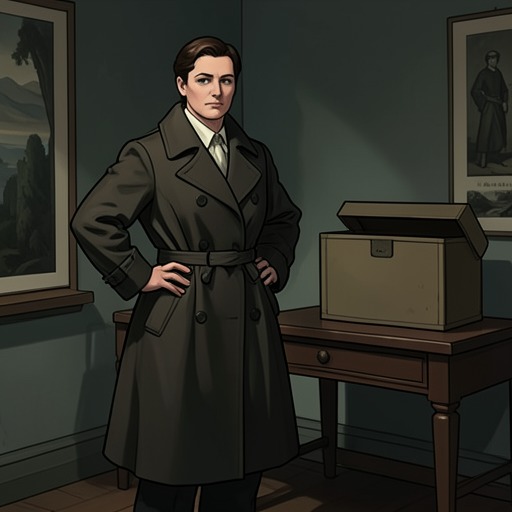
Compton’s estate-transfer instructions
Slow BurnCompton’s estate-transfer instructions make inheritance a procedure as carefully arranged as the fortune itself. Kate MacKenna must attend a meeting at Smith and Wesson, listen to Compton Thomas MacKenna’s advisers and accountants explain how he built his wealth, and only then sign the papers accepting the estate. The sequence gives Compton’s advisers a formal place in the handover, but it does not bind Kate to employ them afterward; the difference between explaining his methods and retaining control over her decisions becomes central to the rule’s meaning.
Purpose and Structure
Compton’s plan is presented as meticulous, extending from the transfer of assets to the room, order of business, and assigned seating. His attorney, Anderson Samuel Smith, gives Kate a binder compiled by Compton’s accounting firm, intended to let her familiarize herself with the cash holdings and other assets and appreciate what Compton accomplished. At the meeting, four advisers and two accountants are to explain how the fortune was accumulated before Kate signs. The instructions specify the second-floor conference room at Smith and Wesson, where Compton signed his new will, as the place where the transfer itself must occur.
The scheduled timing also serves a practical purpose. Compton wanted the meeting two days after his death, but Anderson Samuel Smith says that he believes the date was chosen so the advisers and accountants would be in Savannah in time for the funeral. The schedule was therefore less rigid than the venue: Compton allowed for illness and emergencies, and the meeting could be moved. When Dylan Buchanan determined that the original three o’clock appointment could not safely proceed, Anderson Samuel Smith agreed to try for seven the following evening.
Family Shares and Kate’s Choice
The instructions distribute more than money; they determine who may benefit if Kate refuses the inheritance. Anderson Samuel Smith tells Kate that Compton named no succeeding heir and was confident that she would accept. If she refused, Anderson believed the three nephews—Roger MacKenna, Ewan MacKenna, and Bryce MacKenna—would ultimately be next in line because they had maintained contact with Compton while he was alive. Compton’s will, by contrast, explicitly limited what his nieces Kiera MacKenna and Isabel MacKenna could receive. Their shares, like the nephews’ assigned shares, did not make their attendance necessary. Kate alone had to be present to sign the acceptance papers.
At first, Kate rejects the inheritance outright. Anderson Samuel Smith asks her to take the binder and give herself until the next day to think; he warns against a rash decision and offers to answer questions by phone at any hour. He also provides arrangements for Compton’s burial, while encouraging her not to attend. When Kate asks whether the cousins must attend the later meeting, Anderson explains that Compton’s instructions require the brothers to be invited, though their presence is optional. He believes Compton wanted them to witness what they stood to lose. The ceremony thus places Kate’s private decision within a family contest, without giving the other relatives a veto over it.
Security and the Fixed Venue
The process becomes difficult to carry out because Kate remains in danger. Dylan Buchanan will not let her walk into the Smith and Wesson building until he is satisfied that she can do so safely. Coordinating protection with Nate Hallinger, the Charleston Police Department, the Federal Bureau of Investigation, and the Savannah Police Department would take time, so Dylan proposes moving the meeting to a safer location, such as the Silver Springs police station. Anderson Samuel Smith refuses to change the venue: Compton specifically required the transfer to take place at Smith and Wesson, in the conference room where he had signed the new will.
Compton’s insistence on the location reflects his wish to direct every facet of his affairs, but it also forces Dylan to adapt security around the estate’s procedure rather than replace it. Anderson explains that Compton expected Kate to follow in his footsteps and thought his advisers would guide her toward decisions that increased the fortune. He also believes Compton wanted to impress her and regarded her as his prodigy. Yet the arrangement is not a condition that Kate keep those advisers. Anderson, speaking as her attorney, says he would strongly recommend that she dismiss them. The distinction leaves the meeting as an obligatory lesson and display, not a permanent delegation of Kate’s financial authority.
Completion and Documentary Stakes
When the meeting finally takes place at seven, Kate and Dylan spend two hours listening to the advisers and accountants. The men describe their past work and speak as though they expect to manage the inheritance in the future. They offer forms that would authorize continued financial guardianship and promise annual reports. Kate listens politely, with Dylan beside her, but the procedure does not establish that she accepts their proposed continuing role. After the presentations, the advisers witness Kate signing the papers Anderson Samuel Smith prepared. He then announces that the transaction is complete, no further stipulations remain, and Compton’s wishes have been fulfilled.
The formal handover sits beside a separate and more dangerous set of financial documents. Kate’s mother had taken a three-year loan with a balloon payment of nearly three hundred thousand dollars due in four weeks, pledging all her assets as collateral; those assets included Kate’s company and her name. After reading her mother’s hospital bills and receipts, Kate understands that the insurance had run out and that her mother signed away what she owned in desperation to keep her daughters from inheriting the debt. Later, Kate points out that someone added the company to the loan document without imitating her mother’s handwriting. She also confronts the people involved with the date showing that one of them spoke to her mother three weeks after her death, accusing them of arranging the loan with Tucker Simmons and his wife. The prosecuting attorney is reviewing evidence for possible conspiracy charges, and the bank offers to replace the existing loan with an unsecured one.
The contrast sharpens what the estate instructions can and cannot do. Compton’s will lays out who receives what and how Kate is to accept it; the loan papers show how altered documents can put her company at risk. The estate protocol gives Kate time, information, and the final signature, but it does not itself resolve the separate threat created by the loan. Its decisive outcome is narrower and concrete: after the prescribed meeting, Kate formally accepts the inheritance, while the advisers’ hoped-for continuing control remains distinct from Compton’s completed transfer.